From the NotoriousOnline archive. This page brings together the versions the fan site published between 2000 and 2009. Facts were checked on November 18, 2026; any corrections are listed at the end.
At a glance
| Name | Christopher G. L. Wallace |
| Stage name | The Notorious B.I.G. |
| Aliases | Biggie Smalls, Frank White |
| Born | May 21, 1972, Brooklyn, New York |
| Died | March 9, 1997, Los Angeles, California |
| Occupation | Musician, entrepreneur, father |
Early life in Bedford-Stuyvesant
Christopher Wallace was the only child of Voletta Wallace and was raised by his mother alone in Brooklyn's Bedford-Stuyvesant neighborhood. She remembers that he sang and talked before he could walk, and that he wrote large, neat letters before he started school. He did well in class, earned honors, and thought about a future as a graphic artist.
The neighborhood pulled in another direction. Many of the young men around him were known as junior outlaws, and Wallace became known on his block as Big Chris, someone who spent a lot of time on the corner. What people in the neighborhood also knew was that he could rhyme. Lil' Cease recalled that he would turn up at a local house party, perform a verse, and leave the room buzzing.
Discovery
Wallace made a tape with Mister Cee, the DJ of Big Daddy Kane, and it was entered in the Unsigned Hype competition run by The Source magazine. It won. In the basement recording, he rapped over "Half-Steppin'", and the tape reached Sean "Puffy" Combs, the founder of Bad Boy Records, who was looking for a hardcore rapper. Combs said he played it over and over and knew he had to meet the artist.
Combs first signed Wallace to Uptown Records in 1992. After Combs was fired from Uptown in 1993, he founded Bad Boy Records and Wallace went with him. Within weeks he was working on remixes for Mary J. Blige, Super Cat and Neneh Cherry, and his first song under his own name, "Party and Bullshit", appeared on the soundtrack of the film Who's the Man? in 1993. His first notice outside Brooklyn came from his guest appearance on a Mary J. Blige record, which was the "Real Love" remix, released in August 1992. The "What's the 411?" remix followed in 1993.
Ready to Die
His debut album, Ready to Die, came out on September 13, 1994. It told its stories in the first person, drew on his own life, and was written and delivered in a cinematic style. The first single, "Juicy", went gold within weeks. The album was certified gold in November 1994, platinum in March 1995 and four times platinum in October 1999. "Big Poppa" and "Warning" followed and reached number one, and "One More Chance" came next.
In June 1995, "One More Chance" debuted at number five on the pop singles chart, which tied Michael Jackson's "Scream / Childhood" as the highest debut for a single. The album kept selling through 1995 and made him one of the most visible figures in hip hop. At the 1995 Source Awards he won three awards, including Best New Artist, and "Big Poppa" was named Single of the Year at the Billboard Music Awards.
Junior M.A.F.I.A.
Wallace brought his childhood friends Lil' Kim and Lil' Cease into the music business and formed the group Junior M.A.F.I.A. with them. Their 1995 album Conspiracy went gold, and Lil' Kim's 1996 solo album Hardcore went platinum.
Life After Death
Wallace began his second album after what he described as hard lessons about fame, excess and greed, and he said he was glad to be back in the studio and away from the drama. Life After Death was a 24 song double album with production by Sean "Puffy" Combs, RZA and DJ Premier, among others.
It was released on March 25, 1997, 16 days after his death, and debuted at number one with record first week sales. Its singles included "Hypnotize", "Mo Money Mo Problems" and "Sky's the Limit". In 1997 it won Billboard's R&B Album of the Year, an MTV Video Music Award for Best Rap Video and two ASCAP Awards. In December 1997 Spin magazine named him Artist of the Year. The album was certified Diamond, meaning 10 million RIAA units (each copy of the double album counts twice), and critics around the world ranked it among the best albums of the year.
RZA described the effect on other artists this way: before Biggie you could release anything, and afterward you knew you had to come correct. His influences ranged from Kool G Rap and N.W.A to Too Short and Slick Rick, and New York embraced him as one of its own. His stories reached listeners far beyond the New York area.
March 9, 1997
Early on the morning of March 9, 1997, Wallace was returning to his hotel in Los Angeles from a Soul Train Award party. Another car pulled up beside his GMC Suburban in front of the Petersen Automobile Museum, and shots were fired into the side of the vehicle where he was sitting. He was taken to a nearby hospital and died there.
The loss shocked the music industry. A private funeral was held first, with Queen Latifah and members of Public Enemy and Naughty by Nature among those who attended. The casket was open from the waist up, and he wore a white double-breasted suit and a matching hat. The public funeral in Brooklyn drew thousands of people who crowded the streets to see the hearse. Some climbed on cars and clashed with police, and ten people were arrested.
His label mates recorded "I'll Be Missing You" as a tribute. May 14 was declared Notorious B.I.G. Day, when more than 200 radio stations played the single and then observed 30 seconds of silence. The single sold more than three million copies, and the money from it went to his two children.
The fan site wrote at the time that the murder investigation was still active and that no one had been arrested. As of 2026, no one has been charged or convicted, and the LAPD describes the case as open and unsolved.
Born Again and legacy
Born Again, a second posthumous album, was released two years after his death. It debuted at number one and took the top spot from Celine Dion. Lil' Kim, Lil' Cease, Snoop Dogg, Busta Rhymes and Ice Cube were among the rappers who appeared on it, and Puff Daddy added verses. The album was presented as a celebration of his life and work and not as a memorial.
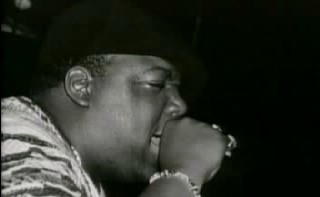
Wallace said in an interview that the main role models of his youth were the local drug dealers on his block, who showed him what life was about on the street. Those who saw him perform at clubs and concerts remember that he lifted every show with stories drawn from his own life and rise to fame.
A note from the fan site
Christopher Wallace was undoubtedly one of the greatest rappers of all time and is a legend in his own right. Even today, many people want to learn more about him, and many remember what he accomplished in his very young and successful career. He might be physically gone, but he will always be alive through his work. He was larger than life.
Sources and credits
- The life story, career and death sections, rewritten from the biography the old site published: Bad Boy Records (Bad Boy Entertainment) official press biography
- Additional biography credits named on the old page: All Music Guide
- Additional biography credits named on the old page: UBL
Corrections
- Correction: The archived biography said Wallace signed to Bad Boy in 1993. Sean Combs first signed him to Uptown Records in 1992, and Wallace joined Bad Boy after Combs left Uptown in 1993.
- Correction: The archived biography named the Mary J. Blige "What's the 411?" remix as his first notice. The "Real Love" remix, released in August 1992, came first, and the "What's the 411?" remix followed in 1993.
- Correction: The archived biography said Ready to Die reached triple platinum by the end of 1994. It was certified gold that year, platinum in March 1995 and triple platinum in August 1998.
- Correction: the page said Diamond meant more than 10 million copies sold. Diamond means 10 million certified RIAA units, and each copy of the double album counts as two.